

It’s funny how watching Love Story on Hulu and reading Once Upon a Time: The Captivating Life of Carolyn Bessette-Kennedy has brought up so many emotions, memories, and possibilities that I’ve kept hidden since I graduated from The School of the Art Institute of Chicago.
Recently, I found myself thinking back to my trip to New York City in 2009, during my senior year. It was a class trip with the fashion department, and we visited everything from Marc Jacobs to Ralph Rucci, along with smaller, emerging brands and even costume designer William Ivey Long.
It was only a week, but it felt like a whirlwind of information, movement, and possibilities. That unmistakable New York energy, raw, ambitious, and slightly chaotic was everywhere. I still can’t pinpoint a single highlight. Visiting the Alexander McQueen’s boutique was unforgettable, seeing one of McQueen’s corsets up close at Fashion Institute of Technology felt almost unreal. It was smaller than I expected, yet infinitely more powerful in person.
I also remember seeing the Celebration cover artwork by Mr.Brainwash, a piece that carried the same intensity as the city itself. Everything felt like it wanted to be seen, to be felt, to exist at its most expressive edge.
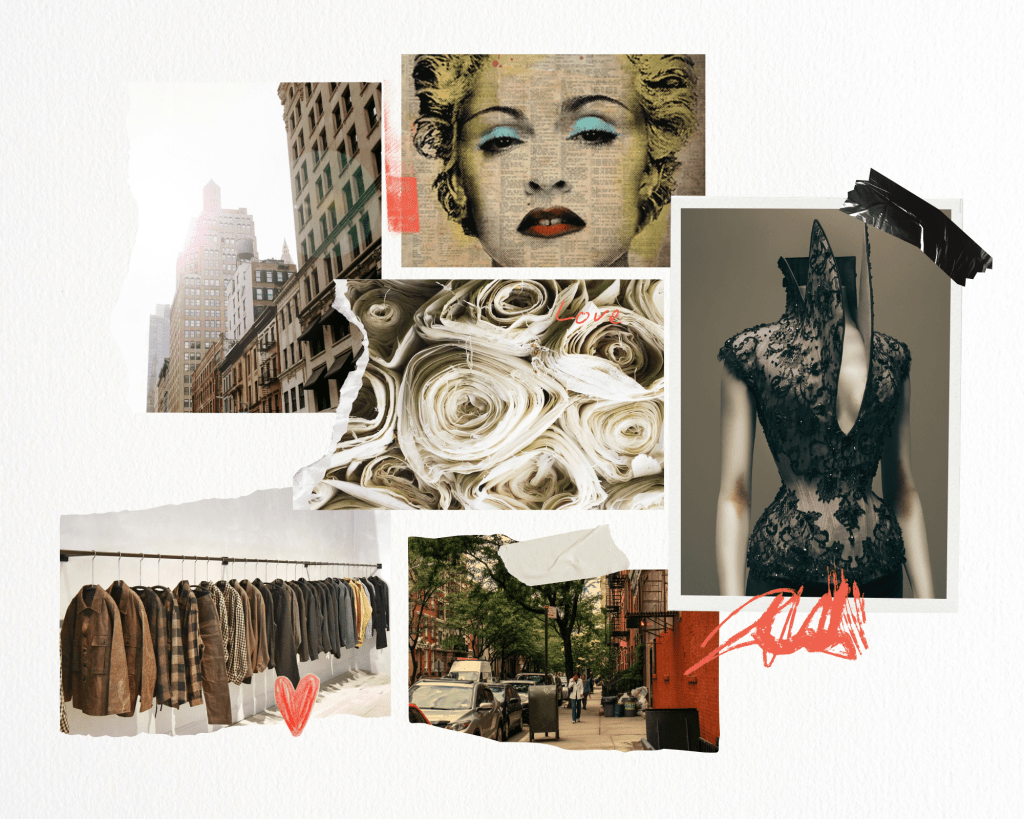
Even now, as I write this, I can still feel that energy at my fingertips.
After that trip, one of our instructors, fresh from New York City, introduced us to the bias cut. We had already encountered her work in the Meatpacking District, where her boutique showcased collections shaped almost entirely by this technique. Through her, we began to understand how the bias cut moves, how it transforms fabric, how it comes alive on the body. We were asked to create multiple pieces using this approach and document them in an editorial way.
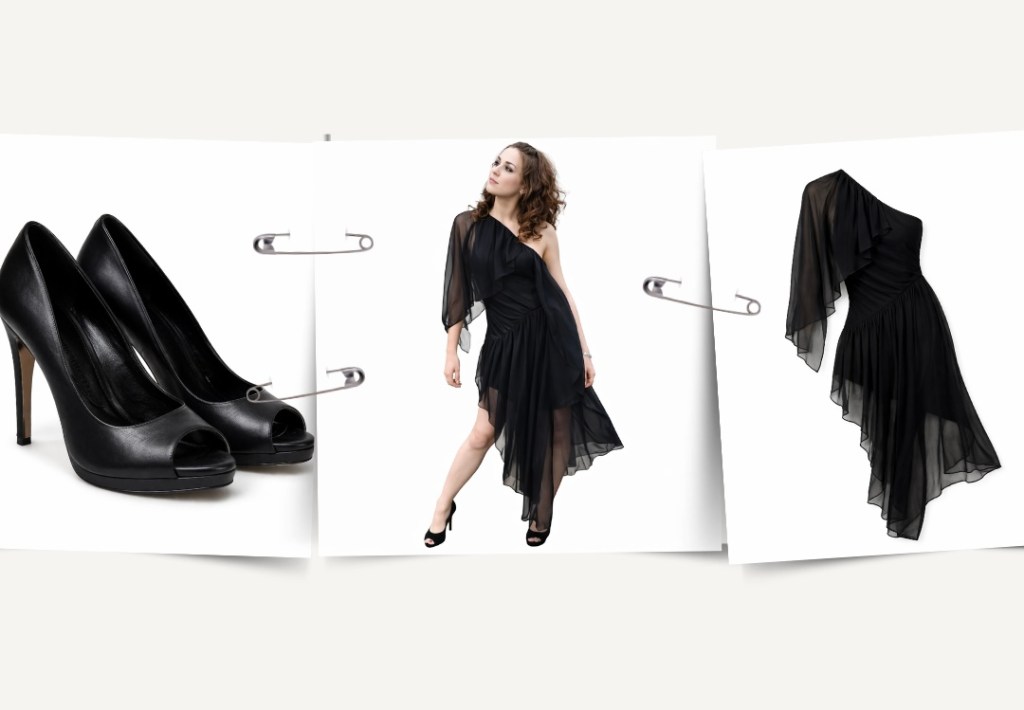
There’s one dress in particular I’ve been thinking about lately from that era.
At the time, I was deeply curious about fabrics, textures and colors. But looking back, I realize I was more focused on the idea of the garment than on how it would actually live on the body. I chose a fabric that held its shape, something closer to taffeta, when what the design truly needed was softness, movement, and drape.
This afternoon, I picked up black jersey and chiffon fabric to recreate that dress. This time with a different understanding. I’ll be using a 1960s pattern as a base. The structure is similar, but I already know it will evolve into something else.
Something closer to what I was trying to say all along.

 HMLstudio
Leave a comment